



Dear Conquer Addiction Mom,
My son’s cocaine addiction is ruining his life. Yet he insists he doesn’t have a problem and won’t go to rehab. What can I do?
Toronto Mom
Dear Toronto Mom,
Convincing someone that they need treatment for their addiction is the most common problem faced by families of addicts. Addiction hijacks the brain into believing that the person can’t live without (or, at least, doesn’t want to live without) their drug of choice.
Years ago, I couldn’t understand why my daughter kept drinking enough alcohol to potentially kill herself night after night. She was a smart girl – surely she could see that her life was falling completely apart around her. Why didn’t she just stop drinking? It wasn’t until I read her goodbye love letter to alcohol that I started to understand the deadly grip alcohol had on her.
Traumatic Events Often Bring People to Treatment
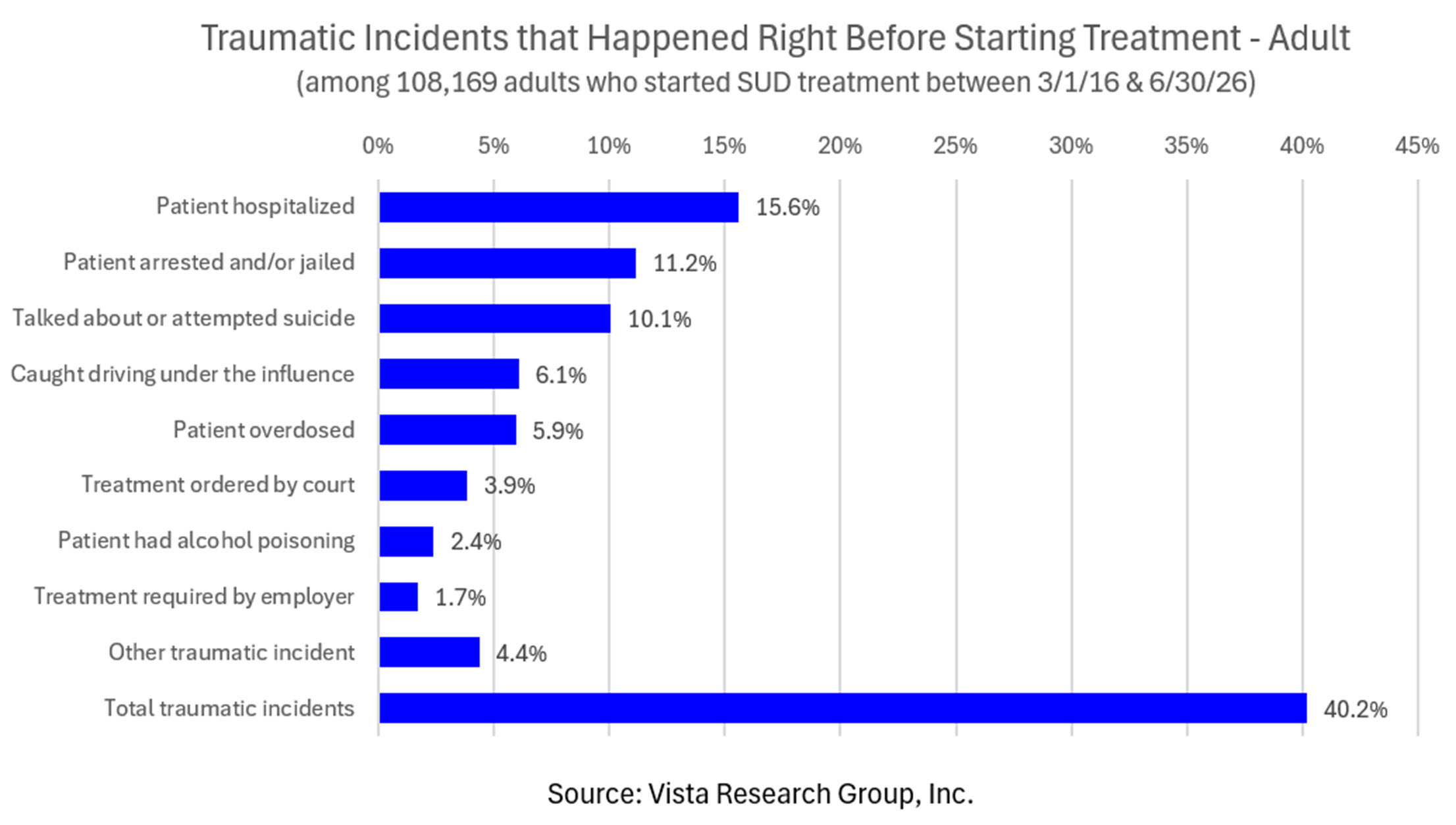
Vista Research Group has asked more than 100,000 patients about the factors that led them to start addiction treatment. Over 40% of these adults reported having one or more traumatic events, such as being hospitalized or getting arrested for driving under the influence, right before they started treatment:
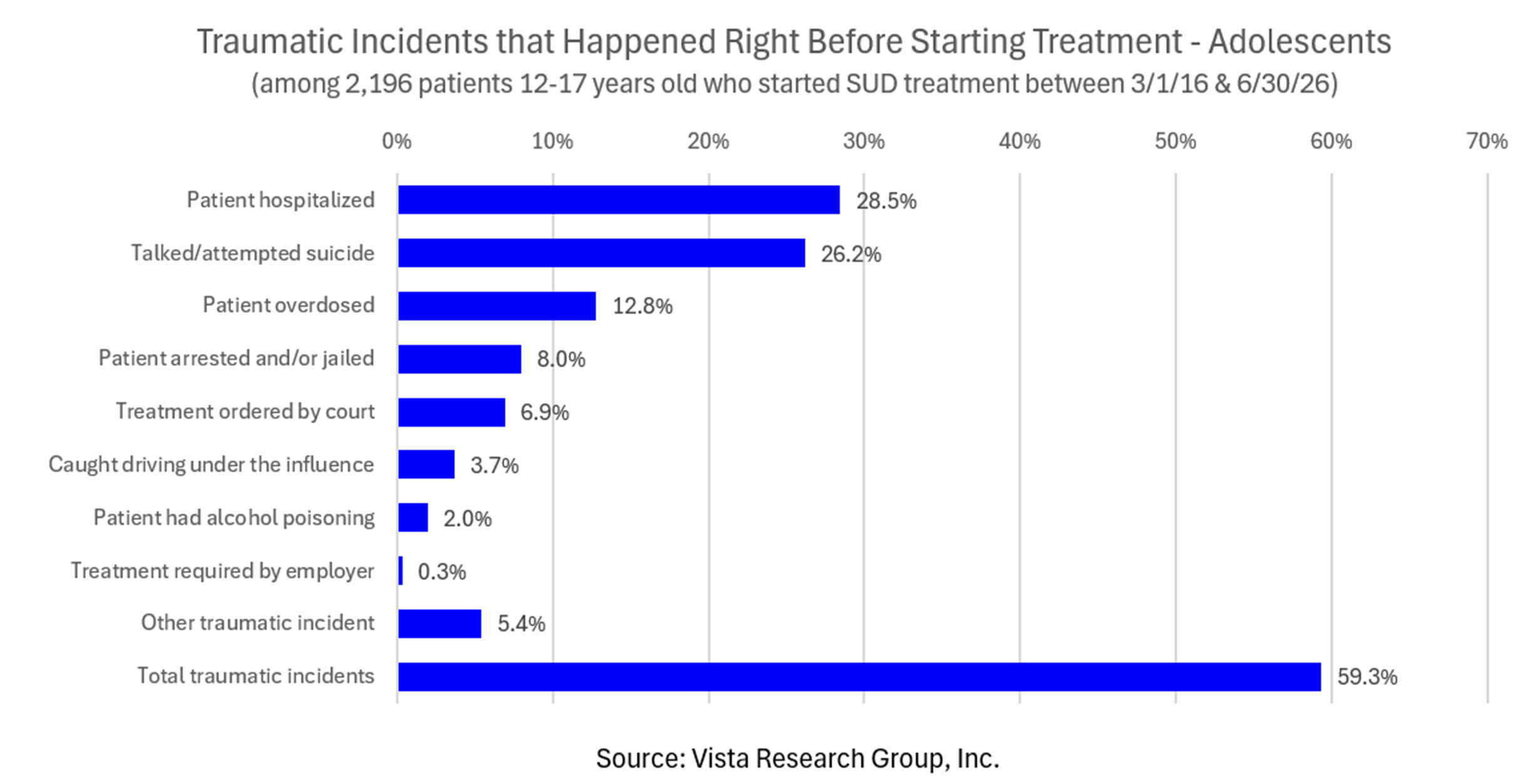
Traumatic events play an even greater role in bringing adolescents totreatment. Almost 60% of 12- to 17- year-olds report having one or more traumaticevents right before starting treatment. Close to half of these teenagers specificallyreported being hospitalized and/or talking about or attempting suicide shortly beforeentering treatment:
Families Play a Major Role in Initiating Treatment
A second critical factor driving people to rehab is that their family or friends asked or told them to go to treatment. Almost half (48.9%) of all patients mentioned this as one of the primary reasons they entered treatment:
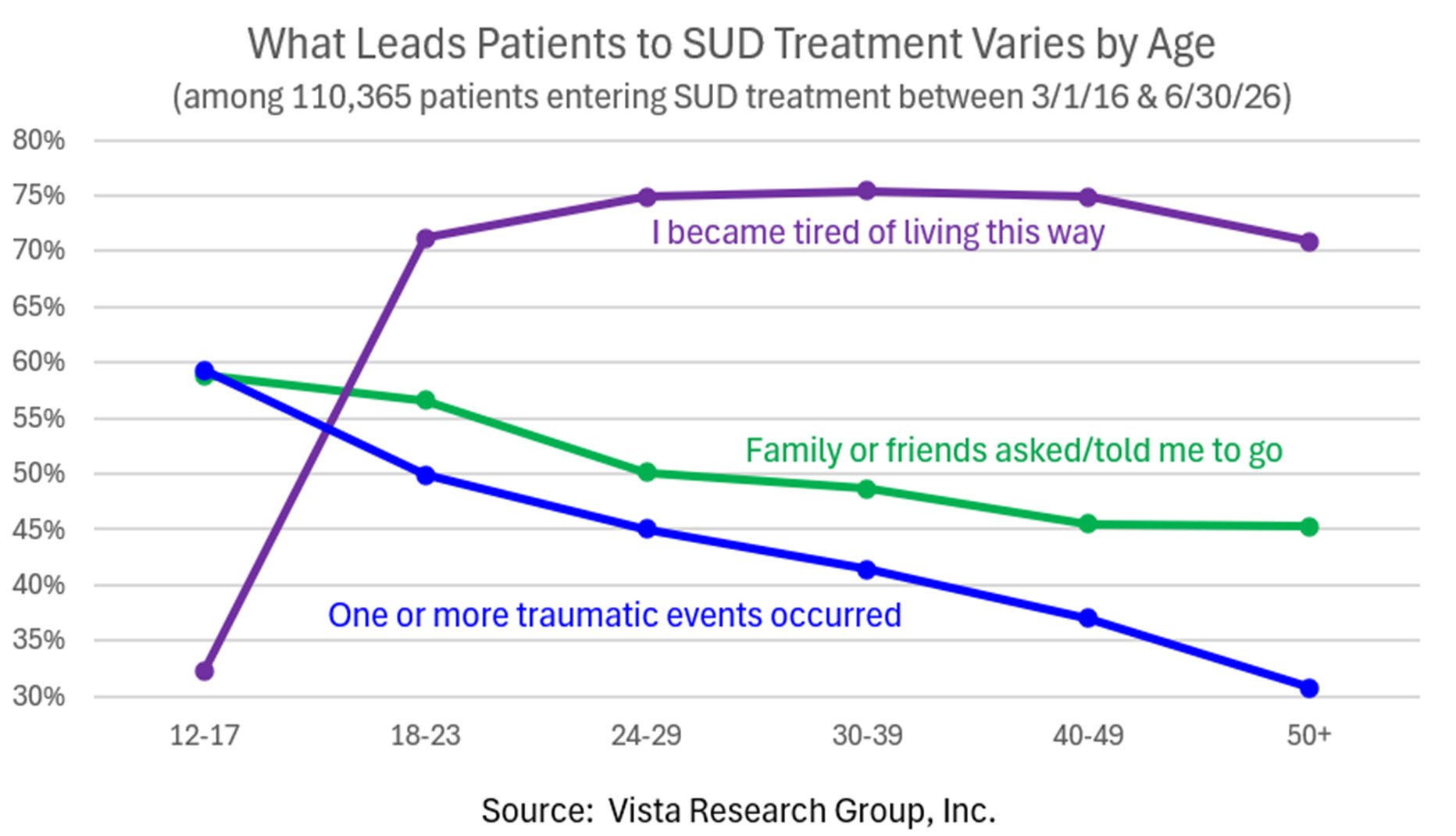
Not surprisingly, family pressure was most prevalent among teenagers and young adults. However, even among 50+ year-old patients, close to half (45.3%) reported being asked or told by family or friends to go to treatment.
Frankly, I suspect this might even under-report the importance family has. Dan Kemp,founder and former CEO of DreamScape Marketing, has estimated that 60% of all first calls to rehab admission lines are made by moms!
When They’re Not Ready To Go to Rehab
You probably see the problem long before your loved one will admit to it. Most families do.
The hard truth is that addiction is progressive. If nothing changes, the consequences will get worse. But our data shows that those consequences are often what make individuals receptive to the idea of going to treatment for the first time. More than 4 in 10 adults, and nearly 6 in 10 teens, started treatment right after a crisis like a hospitalization or an arrest.
So stay close. Watch for the opening. And start researching treatment options so you’re ready to move when it comes.
During this anxiety-filled time, I recommend three things:
Periodically raise the idea of treatment with your loved one. Keep it low-key, not threatening. A quiet comment like “I suspect you’re eventually going to need treatment” can be enough to get them thinking about it.
In my daughter’s case, she fought vehemently against our recommendation that she go to residential treatment for several months following a serious car accident. When she called to tell us she’d just had a second car accident, she brought up the need for residential treatment herself.
Don’t enable their using. Enablers facilitate and sustain their loved ones’addiction by removing the natural consequences of their actions. Enabling can take many forms, from financially supporting their substance use to making excuses for the person’s mistakes. The end result of all enabling is the same: there is little motivation to change, and the addiction typically gets worse.
Let’s say, for example, that your son has been fired from his job because he called in sick too many times. Don’t make this your problem, and don’t give him money. You can commiserate with him about what happened and, if he’s receptive to it, brainstorm options for finding another job. But it’s up to him to solve his problem, not you.
If you’re finding it challenging to keep the lines of communication open with your loved one, look into CRAFT. Designed specifically to help parents influence their child’s substance use by staying involved in their lives in a positive way, CRAFT (Community Reinforcement & Family Training) teaches five skills:
Active listening
Identifying problems and solutions
Allowing natural consequences (within reason)
Positively reinforcing successes
Taking care of yourself
Many groups provide training in the CRAFT methodology. The Partnership to End Addiction offers free CRAFT training modules you can take at your own pace.
Watch for Moments When They’re Open to Help
The opening you’re waiting for doesn’t have to be disastrous.
In our research, many patients didn’t point to an overdose or a DUI as the moment that changed their minds. They pointed to something much smaller, like having their feelings hurt by a friend or losing touch with reality for a short time.
A dear friend of mine woke up one morning to find scissors on her bedside table, with no memory of what she had planned to do with them. It frightened her so much that she quit alcohol cold turkey that day, after decades of heavy daily drinking.
You can’t predict which moment will be the one. That’s why it matters to stay close and stay ready.
And don’t ever give up hope, because the opening can come at any time. Be prepared to act when it does.
Joanna