



If you’ve just learned that your daughter is cutting herself or otherwise self-harming, you’re likely feeling shocked and horrified. It’s upsetting enough to imagine anyone hurting themselves on purpose; realizing how unhappy your daughter must be is heartbreaking.
Cutting is usually a sign that someone is feeling intense emotional pain and doesn’t know how else to handle it. Sometimes a child who is cutting feels emotionally numb, and physical pain brings relief because it allows them to feel something again. For other children, the intensity of their emotional pain builds until it feels like they are going to explode, and cutting somehow releases the pressure.
Physiologically, cutting triggers the release of endorphins, the brain’s natural painkillers, which can create temporary calmness or pleasure. The child learns that intense distress can be relieved through self harm. Each time the child cuts again, the pattern reinforces itself and becomes harder to break. Just like any other addiction, stopping becomes extremely difficult without compassionate professional support.
How Common is Cutting?
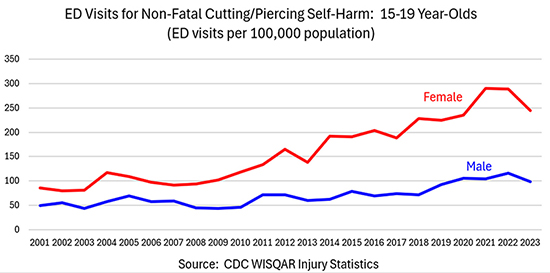
The incidence of cutting has been increasing rapidly among pre-teens and teenagers since 2001. According to the CDC, the frequency of non-fatal cutting-related emergency department visits among teenagers 15 to 19 years old tripled among girls and doubled among boys between 2001 and 2023:
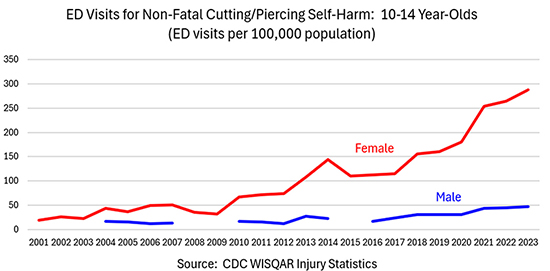
During this period, cutting-related emergency department visits increased even more rapidly among children 10 to 14 years old. In fact, girls 10-14 are now cutting themselves as frequently as 15-19 year-old girls:
While cutting oneself is the most commonly-reported method of non-suicidal self-injury (NSSI), others self-harm through burning or hitting themselves or by picking at wounds to stop them from healing.
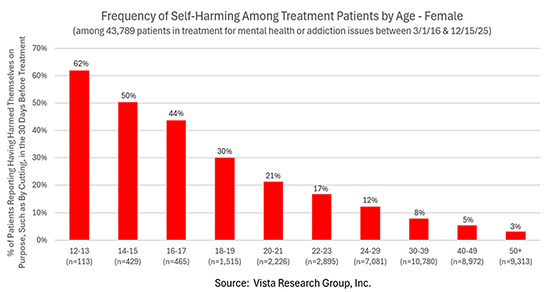
Vista’s data for adolescents entering treatment for mental health or substance use issues shows that self-harming is extremely common among troubled children. For example, 62% of 12-13 year old girls and 50% of 14-15 year-old girls reported self-harming in the 30 days before treatment:
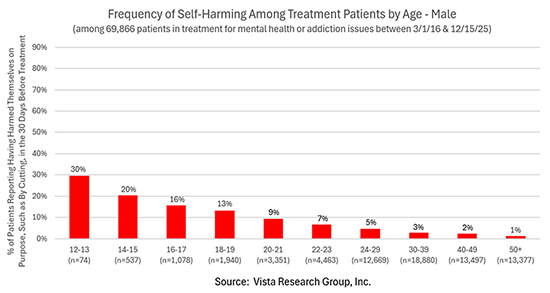
While fewer boys are self-harming, 30% of 12-13 year-old boys and 20% of 14-15 year-old boys report doing so in the 30 days prior to entering mental health or substance use disorder treatment:
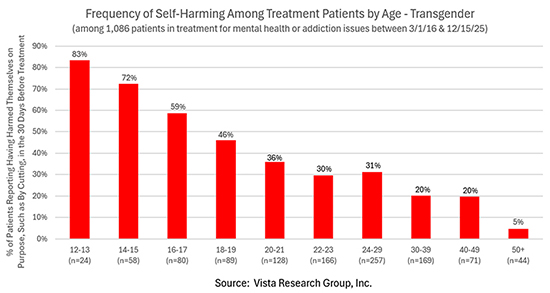
The incidence of self-harming among children who describe themselves as transgender or non-binary is even higher. While Vista’s base sizes are small, 83% of these 12-13 year olds and 72% of these 14-15 year olds report self-harming:
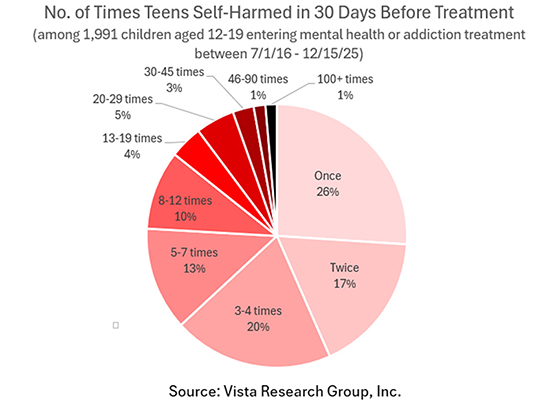
In addition to the high percentage of patients who report self-harming, the number of times patients report harming themselves is also really scary. Among the 1,991 adolescents who reported self-harming in the 30 days before entering treatment in the Vista Research Network, only 26% reported having done so once. Twenty-four percent (24%) reported harming themselves 8 or more times (at least twice each week) during the preceding 30 days and 5% self-harmed at least once every day:
How to Help Your Son or Daughter
Your child’s self-harming is a serious cry for help. Expressing your disbelief that they’re hurting themselves or discounting their cutting as an attention-seeking behavior will make them feel even worse. Your child needs to know that you love them deeply and will help them get the help they need to feel better and stop harming themselves.
Regardless of any assurances they give you to the contrary, your child needs professional help. Look for a therapist who regularly treats teenagers who hurt themselves, not just adolescents in general. Ask directly about their experience with cutting, how they assess and manage safety, and whether they use structured, evidence-based approaches like Dialectical Behavior Therapy (DBT).
This is frightening territory for any parent. With experienced help, your child can stop self-harming before it becomes more deeply entrenched. I’m truly sorry you’re facing this, and I hope you are able to find the right therapist for your child quickly.